Mold doesn’t wait. Once moisture finds a foothold in an Asheville home — whether from a slow plumbing leak, a crawl space moisture problem, or the aftermath of a major flood event — mold can begin developing within 24 to 48 hours. For Western North Carolina homeowners dealing with mold remediation in Asheville, speed of response and technical expertise are everything. Secure Restoration has been the trusted name in mold inspection, testing, and remediation across the Asheville area since 2012 — IICRC certified, BBB A+ rated, and available 24/7.
Why Mold Is a Serious Problem for Asheville Homeowners
Mold remediation Asheville homeowners need isn’t just a reaction to isolated incidents — it’s a response to the structural reality of living in Western North Carolina. Asheville’s climate, housing stock, and recent weather history combine to create persistently elevated mold risk that other regions simply don’t face to the same degree.
High Humidity & Mountain Climate
Asheville’s mountain climate delivers annual rainfall well above 47 inches, combined with relative humidity levels that routinely run between 60 and 80 percent during summer and fall months. Mold requires humidity above 60 percent to sustain growth. For Asheville homeowners, that threshold is crossed for significant portions of the year — meaning any untreated moisture source, no matter how minor, has ideal conditions to support an active mold colony.
Older Homes With Limited Vapor Control
A substantial share of Asheville’s housing inventory was built before modern vapor barrier and ventilation standards existed. Homes in Montford, Kenilworth, West Asheville, and other established neighborhoods frequently feature unencapsulated crawl spaces, minimal attic ventilation, and basement walls with no waterproofing membrane — conditions that allow ground moisture to migrate into the structure continuously. Mold remediation Asheville calls involving older homes often uncover long-established colonies that have been active for years before becoming visible.
Post-Hurricane Helene Mold Risk
Hurricane Helene’s September 2024 flooding created an accelerated mold risk timeline across Buncombe County and surrounding communities. Properties that experienced flooding — even those that appeared dry after initial water removal — absorbed significant moisture into wall cavities, subfloors, insulation, and structural framing. Without professional structural drying and verification, that embedded moisture created ideal mold growth conditions in the weeks and months that followed. Many homeowners are still discovering mold in Asheville properties as a delayed consequence of Helene, even when the original flooding appeared minor.
Hurricane Helene Aftermath — A Changed Landscape
The catastrophic flooding caused by Hurricane Helene in September 2024 permanently altered how Asheville-area homeowners think about water damage risk. Some areas in Buncombe County received over 20 inches of rain in 48 hours, causing the French Broad River to reach record levels. Secure Restoration has been on the front lines of recovery ever since.
Crawl Spaces & Basements
Western North Carolina’s steep terrain means that a high proportion of Asheville homes sit on crawl space or partial basement foundations — areas that are naturally prone to moisture infiltration from sloped drainage, groundwater, and humidity migration through exposed soil. Unencapsulated crawl spaces are among the most common sources of mold in Asheville homes, and the mold that develops there can circulate through the entire living space via the HVAC system and natural air movement.
Why Mold Is a Serious Problem for Asheville Homeowners
Mold in Asheville homes isn’t always visible. In fact, the most significant mold growth often occurs inside wall cavities, under flooring, in attic insulation, and in crawl spaces — completely out of sight until the problem is advanced. These are the signs that should prompt a professional mold inspection.
Visible Mold Growth
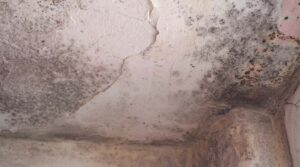
Any visible mold — regardless of color, size, or location — warrants professional evaluation. Small surface patches of mold are frequently the visible indicator of a much larger colony behind walls or beneath surfaces. Do not attempt to clean visible mold with household products; disturbing mold without proper containment causes spores to become airborne and spread contamination to previously unaffected areas.
Persistent Musty Odor
A musty, earthy odor that doesn’t resolve with cleaning or ventilation is a reliable indicator of hidden mold growth. The smell is caused by microbial volatile organic compounds (MVOCs) produced by active mold colonies — it’s detectable even when the mold itself is not visible. If you notice this odor in a basement, crawl space, closet, or bathroom, professional air quality testing is the appropriate next step.
Health Symptoms That Improve When You Leave
One of the clearest indicators of a mold problem in a home is a pattern where occupants experience allergy-like symptoms — congestion, coughing, itchy eyes, headaches, fatigue — that consistently improve when they spend time away from the property. This symptom pattern, particularly in combination with any of the other warning signs, strongly suggests an active mold source in the living environment.
Recent Water Damage or Moisture Events
Any property that has experienced water damage, flooding, plumbing leaks, roof leaks, or HVAC condensation issues within the past 12 months should be evaluated for mold — even if the water was cleaned up promptly. Professional water damage restoration reduces mold risk significantly, but properties where drying was handled with consumer equipment or not fully verified are at elevated risk for post-event mold growth.
Discoloration on Walls, Ceilings, or Flooring
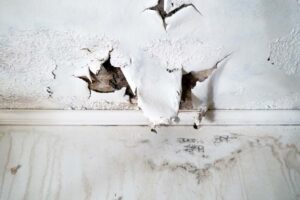
Water staining, dark spots, bubbling paint, warped drywall, and soft or discolored flooring are all physical signs of moisture infiltration that may be accompanied by mold growth. These indicators are particularly significant in bathrooms, under sinks, around windows, in basements, and in rooms adjacent to crawl spaces.
| Mold Type | Also Known As | Where Found in Asheville Homes | Health Risk |
|---|---|---|---|
| Stachybotrys chartarum | Black Mold | Chronically wet drywall, crawl spaces, basements — common after Helene flooding | High — produces mycotoxins linked to respiratory illness |
| Aspergillus | —– | Window frames, bathroom tile, attics with poor ventilation | Moderate — triggers allergies and asthma; especially problematic in older homes |
| Penicillium | —– | Water-damaged insulation, wallpaper, carpet padding | Moderate — spreads rapidly; associated with sinus infections and respiratory issues |
| Alternaria | —– | Damp bathrooms, under sinks, around window condensation | Moderate — common allergen; can worsen asthma in children |
| Mucor | —– | Water-damaged carpeting and upholstered surfaces | Moderate — fast-growing; opportunistic infections in immunocompromised individuals |
⚠ Important: Color alone does not identify mold species or toxicity. “Black mold” is a term commonly applied to Stachybotrys, but other mold species can appear black, green, grey, or white. Professional air and surface sampling — analyzed by an accredited laboratory — is the only reliable way to identify mold species and assess concentration levels.
Health Effects of Mold Exposure
The health risks associated with mold exposure vary by species, concentration, duration of exposure, and individual sensitivity. For Asheville homeowners — particularly those in older homes with crawl space foundations or those recovering from Hurricane Helene water damage — understanding the health implications of mold remediation Asheville professionals address is an important part of making an informed decision about response timing.
Air Sampling
Air samples are collected using a calibrated pump and cassette that captures airborne spores from a defined volume of air. Samples are typically taken from suspected areas and from an outdoor reference location. Results — provided by an accredited laboratory — report the concentration and species of spores present, allowing direct comparison between indoor and outdoor baseline levels. Elevated indoor spore counts relative to outdoor levels confirm active mold growth within the space.
Surface Sampling (Tape Lift / Swab)
Surface samples are collected directly from visible mold growth or suspect surfaces using a tape lift or sterile swab. These samples identify the specific species present on a surface and are used alongside air sampling to build a complete picture of the contamination. Surface sampling is particularly useful for confirming whether visible discoloration is in fact mold versus mildew, staining, or other materials.
Moisture Mapping
Before any remediation work begins, Secure Restoration technicians use thermal imaging cameras and calibrated moisture meters to map all areas of elevated moisture content in the structure. This step is essential — it identifies the source of the moisture that’s feeding the mold and reveals hidden wet areas that may not yet show visible mold growth but will if left untreated. Remediation without moisture source correction is remediation that will fail.
Third-Party Post-Remediation Testing (Clearance Testing)
Secure Restoration strongly recommends — and in many cases, requires — post-remediation air and surface sampling by an independent industrial hygienist or indoor environmental professional (IEP) upon completion of work. This clearance testing independently verifies that spore counts have returned to acceptable levels and that the remediation was successful. For insurance claims, clearance documentation is often required before repairs are authorized.
Our Step-by-Step Mold Remediation Process
Secure Restoration follows IICRC S520 Standard for Professional Mold Remediation on every job — the same industry standard that governs professional mold remediation Asheville and across the country. Here is exactly what that process looks like from your first call through final clearance.
Initial Inspection & Moisture Mapping
A certified technician inspects all suspect areas of the property, takes moisture readings throughout the structure, photographs all findings, and reviews the scope of work and plan of action with the homeowner. If testing is recommended, air and surface samples are collected at this stage.
Containment Establishment
Before any remediation work begins, physical containment barriers are built around all affected areas using heavy-gauge polyethylene sheeting and sealed with tape. This containment, combined with negative air pressure created by HEPA-filtered air scrubbers, prevents mold spores from migrating to clean areas of the home during the remediation process. No remediation work should begin without proper containment — it’s a non-negotiable safety requirement.
HEPA Air Filtration
Industrial HEPA air scrubbers run continuously throughout the remediation process, capturing airborne spores at a filtration efficiency of 99.97% for particles 0.3 microns and larger. Mold spores range from 2 to 100 microns — well within HEPA filtration range. Air scrubbers significantly reduce airborne spore counts and protect unaffected areas of the home during active work.
Mold Removal & Material Treatment
Porous materials — drywall, insulation, wood framing, carpeting — that have been colonized by mold beyond salvageable levels are carefully removed in double-bagged, sealed disposal bags and disposed of per regulatory requirements. Non-porous and semi-porous surfaces are cleaned using wire brushing, damp wiping, and HEPA vacuuming, followed by application of EPA-registered antimicrobial solutions. All work is performed by technicians in appropriate personal protective equipment (PPE).
Moisture Source Correction
Remediation without correcting the underlying moisture source is a temporary fix at best. Secure Restoration’s team addresses the source of moisture — whether it’s a plumbing leak, HVAC condensation issue, crawl space infiltration, or structural drainage problem — concurrently with remediation. For properties with crawl space moisture issues, we can also provide crawl space encapsulation to eliminate the moisture pathway permanently.
Post-Remediation Verification
Once remediation is complete, air and surface clearance samples are collected — ideally by an independent IEP — to verify that spore counts have returned to acceptable ambient levels and that the remediation was successful. Secure Restoration does not consider a mold job complete until clearance testing confirms success. This documentation also serves as the required proof of remediation for insurance claims and real estate transactions.
Repairs & Restoration
With clearance confirmed, our licensed general contractor team completes all necessary repairs — drywall installation, insulation replacement, painting, flooring, trim work, and any structural repairs. The goal is always to return the affected area to its pre-loss condition with no visible evidence that mold was ever present.
The Equipment We Use — and Why It Matters
Effective mold remediation Asheville professionals perform requires more than cleaning products and protective gear. The equipment used during the containment, filtration, and drying phases directly determines the safety of the work environment and the thoroughness of the outcome.
HEPA Air Scrubbers
Industrial HEPA air scrubbers draw contaminated air through a series of filters — culminating in a HEPA filter that captures 99.97% of particles 0.3 microns and larger, including all mold spore species. Units run continuously during remediation and for 24–48 hours after completion to reduce residual airborne spore levels before containment is removed.
Negative Air Pressure Machines
Negative air pressure machines exhaust filtered air from the containment zone to the exterior, maintaining lower air pressure inside the containment than in the surrounding clean spaces. This pressure differential ensures that any air leakage flows into the containment, not out of it — physically preventing spore migration to clean areas.
HEPA Vacuums
Standard shop vacuums will pick up mold spores and expel them back into the air through the exhaust. HEPA vacuums capture spores in the filter rather than recirculating them, and are used to remove settled spore debris from surfaces before and after antimicrobial treatment.
Thermal Imaging Cameras & Moisture Meters
The same thermal imaging cameras and calibrated moisture meters used in our water damage restoration work are essential to mold remediation — locating the moisture sources feeding the mold colony, identifying hidden wet areas that must be dried before remediation is complete, and verifying that the structure has reached safe moisture levels before containment is removed.
Commercial Dehumidifiers & Air Movers
When water damage accompanies mold growth — which is common in Asheville mold cases involving crawl spaces, basements, and post-Helene properties — industrial drying equipment runs concurrently with remediation to eliminate the moisture source from the structure. Attempting mold remediation in an actively wet environment will not produce durable results.
We Need one more of these blocks
For Layout purposes
How Long Does Mold Remediation Take? A Realistic Timeline
One of the most common questions homeowners ask when scheduling mold remediation in Asheville is how long the process will take. The honest answer depends on the size of the affected area, the number of materials requiring removal, and whether accompanying water damage needs to be dried concurrently. Here are realistic timeframes.
| Timeframe | Phase | What Happens |
|---|---|---|
| Day 1 | Inspection & Testing | Technician inspects the property, identifies affected areas, takes air and surface samples if testing is warranted. Containment is established immediately. |
| Day 1–2 | Containment & Setup | Negative air pressure containment is built around affected areas. HEPA air scrubbers begin filtering spores from the air. |
| Days 2–4 | Active Remediation | Affected materials are removed or treated per IICRC S520 protocol. Antimicrobial solutions are applied to surfaces. Source moisture issue is addressed simultaneously. |
| Days 3–5 | Structural Drying (if needed) | If accompanying water damage is present, structural drying equipment runs concurrently to reach target moisture levels before final clearance. |
| Days 4–6 | Post-Remediation Verification | Air and surface samples taken post-remediation. Results confirm that spore counts have returned to safe, ambient levels before containment is removed. |
| Week 2+ | Repairs & Restoration | Once clearance is confirmed, our licensed GC team repairs or replaces drywall, insulation, trim, and any other affected building materials. |
A small bathroom mold situation with no structural involvement may be fully remediated in two to three days. A crawl space mold issue affecting floor joists, insulation, and subfloor may require one to two weeks from initial inspection through clearance testing. Secure Restoration will give you an honest assessment and timeline at your initial inspection — and we’ll communicate updates throughout the process.
Navigating Your Insurance Claim for Mold Remediation
Whether mold remediation Asheville homeowners need is covered by insurance depends on the cause — and the answer isn’t always straightforward. Secure Restoration works with all major insurance carriers and can help document your claim from the first inspection.
When Mold Is Typically Covered
Mold resulting directly from a covered water damage event — a burst pipe, a roof leak caused by a storm, an appliance malfunction — is generally covered under the related water damage claim. Many standard homeowner’s policies include a mold sub-limit (often $5,000 to $10,000) that applies specifically to mold remediation costs. Secure Restoration’s documentation — including moisture mapping, air sampling results, and a detailed scope of loss — supports the claim that mold is a direct consequence of the covered water event.
When Mold Is Typically Not Covered
Mold resulting from long-term neglect, gradual moisture intrusion, or pre-existing conditions is generally excluded from standard homeowner’s insurance coverage. Mold related to flooding from surface water also typically falls outside standard coverage and requires a separate flood insurance policy. If your coverage situation is uncertain, Secure Restoration can help you understand what documentation is needed and how to present your claim effectively.
Steps to Take Immediately
1
Call Secure Restoration at (828) 490-7800 — do not disturb or attempt to clean visible mold before professional assessment.
2
Call your insurance carrier to open a claim and request a claim number.
3
Document visible mold and any associated water damage with photos before anything is moved or cleaned.
4
Avoid running HVAC systems in the affected area — this can spread spores to clean areas of the home.
5
Gather documentation of any recent water damage events, plumbing repairs, or roof work that may have contributed to the mold growth.
There are meaningful differences between a locally rooted company like Secure Restoration and a national franchise that happens to be licensed in North Carolina.
Secure Restoration responds 24/7 across Western North Carolina.
Mold in Your Asheville Home?
Call (828) 490-7800 — or request a free inspection.
Frequently Asked Questions
Mold remediation costs vary based on the affected square footage, number of materials requiring removal, and whether accompanying structural drying is needed. Most residential mold remediation jobs in the Asheville area range from $1,500 to $6,000+. Secure Restoration provides a free mold inspection and assessment so you know the full scope before any work begins.
“Mold removal” implies that mold is physically eliminated — which is technically impossible, since mold spores exist naturally in all environments. Mold remediation is the correct term: it describes the process of reducing mold to safe, ambient levels, eliminating the active colony, treating affected surfaces, and correcting the moisture source that allowed growth to occur. Companies that promise complete “mold removal” are overstating what the process achieves.
It depends on the location and extent of the mold growth. For small, contained areas — a bathroom or under a sink — occupancy during remediation is often possible. For larger infestations involving HVAC systems, crawl spaces, or multiple rooms, temporary relocation may be recommended to avoid exposure to elevated airborne spore counts during active work. Secure Restoration will give you an honest recommendation at your initial inspection.
It depends on the extent of the damage and how quickly treatment begins. HardwooMold will return if the underlying moisture source is not corrected. Secure Restoration addresses moisture source correction as part of every remediation job — not as an optional add-on. When remediation is performed correctly, the moisture source is eliminated, and post-remediation clearance testing confirms that spore counts are at safe levels, durable results are the norm, not the exception.
Possibly — particularly if your property experienced any flooding, water intrusion, or elevated humidity in the fall of 2024. Helene-related mold in Asheville is still being discovered as homeowners and building professionals identify moisture that was trapped in wall cavities and structural assemblies. If you’ve noticed any warning signs since the storm, a professional inspection is strongly recommended.
The only reliable way to verify successful remediation is post-remediation air and surface sampling by an independent professional. Visual inspection alone is not sufficient — mold can be present in concentrations that are not visible. Secure Restoration recommends clearance testing after every remediation job, and your insurance carrier will typically require it before authorizing reconstruction.
Small mold patches on non-porous surfaces — a few square inches of surface mildew on a bathroom tile, for instance — can sometimes be addressed with appropriate cleaning products by a careful homeowner. However, the EPA recommends professional remediation for any mold growth covering more than 10 square feet, any mold in an HVAC system, any mold following significant water damage, and any situation where the moisture source is unknown.
Visible mold growth, persistent musty odors, health symptoms that improve when you leave the home, recent water damage, and discoloration on walls or ceilings. Any combination of these warrants a professional inspection. Many homeowners don’t realize that visible patches are often just the tip of a much larger colony hidden inside walls, under flooring, or in crawl spaces. Early recognition prevents exponentially more costly remediation later.
Mold can begin developing within 24 to 48 hours of water exposure in Asheville’s high-humidity environment. This is why immediate water extraction and professional drying are critical. By the time visible mold appears, the problem is often significantly more extensive than it initially seems. The longer water sits, the deeper it penetrates into structural materials and the higher your risk of hidden mold colonies.
A mold inspection is a visual assessment and moisture mapping to identify where mold is or may be growing. Mold testing involves collecting air and surface samples that are analyzed in a lab to identify the specific species present and concentration levels. Both are important — inspection finds the problem, testing confirms what you’re dealing with and verifies successful remediation. Secure Restoration performs both as part of a comprehensive approach.
Mold is covered if it results directly from a covered water damage event — like a burst pipe, storm damage, or appliance failure. Most policies include a mold sub-limit ($5,000–$10,000). Gradual moisture intrusion and flood-related mold typically aren’t covered without separate flood insurance. We help document and present your claim to maximize coverage, and we work directly with your adjuster throughout the process.
After remediation is complete, an independent professional collects air and surface samples to verify that spore counts have returned to safe ambient levels. Results confirm that remediation was successful and provide the documentation your insurance carrier requires before authorizing repairs. We consider every job incomplete until clearance testing confirms success — this sets us apart from companies that call a job done without verification.
Yes. Active mold is a serious concern for buyers and can significantly impact resale value if disclosed. Proper remediation with clearance testing documentation protects your home’s value and allows future buyers confidence that the problem was handled correctly. Professional remediation now prevents much larger financial impacts later. A disclosure of improper remediation can reduce resale value by 5–15% or more.
Asheville’s steep terrain means many homes sit on crawl space foundations naturally prone to groundwater infiltration and humidity migration through exposed soil. Unencapsulated crawl spaces are among the most common mold sources because moisture has direct contact with wood joists and insulation. The mold that develops there circulates through your HVAC system into living spaces. Crawl space encapsulation eliminates this pathway permanently.
“Black mold” (Stachybotrys) can be dangerous because it produces mycotoxins linked to respiratory illness, but color alone doesn’t determine toxicity or species — other molds can appear black too. Only laboratory testing can identify the exact species and determine health risk. Any visible mold should be taken seriously and assessed by a professional, regardless of color. The focus should be on remediation, not on what color it is.