Whether it’s a burst pipe in a century-old Craftsman bungalow in West Asheville, a flooded basement in the River Arts District, or storm-related flooding in the aftermath of a major weather event, water damage in Asheville demands an immediate, experienced response. Secure Restoration has been Western North Carolina’s trusted restoration partner since 2012 — 24/7, 365 days a year.
Why Asheville Homes Face Unique Water Damage Risks
Water damage Asheville residents deal with is shaped by the specific geography, climate, and housing stock of Western North Carolina. Asheville’s combination of mountain terrain, aging infrastructure, and increasingly intense weather events creates a perfect storm of water damage risk factors homeowners here face year-round.
Mountain Weather Patterns & High Annual Rainfall
The Southern Appalachians receive some of the highest rainfall totals in the eastern United States — Asheville averages over 47 inches of precipitation annually. When two to four inches of rain falls in a matter of hours — as it often does — even well-maintained homes can experience water intrusion almost instantly.
Steep Terrain & Drainage Challenges
Asheville’s hillside neighborhoods — from Kenilworth and Kimberly Avenue to Lakeshore Drive and the neighborhoods surrounding Beaucatcher Mountain — sit on slopes that concentrate and accelerate water flow, pooling against foundations and flowing into crawl spaces.
Older Housing Stock & Aging Infrastructure
A significant portion of Asheville’s residential housing was built between 1900 and 1970 — with rubble-stone foundations never designed to keep water out completely, cast-iron plumbing that corrodes and fails, and drainage systems that have outlived their service life.
Hurricane Helene Aftermath — A Changed Landscape
The catastrophic flooding caused by Hurricane Helene in September 2024 permanently altered how Asheville-area homeowners think about water damage risk. Some areas in Buncombe County received over 20 inches of rain in 48 hours, causing the French Broad River to reach record levels. Secure Restoration has been on the front lines of recovery ever since.
Year-Round High Humidity
Asheville’s mountain climate produces consistently elevated humidity levels. Even minor water intrusion events can quickly escalate — wet materials in a high-humidity environment create ideal conditions for mold growth within 24 to 48 hours.
Understanding Water Damage Categories: 1, 2, and 3
The IICRC uses a standardized classification system to define contamination levels — determining the safety protocols, equipment, and materials required to safely restore your home.
| Category | Water Type | Common Sources | Risk Level |
|---|---|---|---|
| Category 1 | Clean Water | Broken supply lines, sink overflows, rain intrusion | Low — escalates quickly if untreated |
| Category 2 | Grey Water | Washing machine overflow, dishwasher leaks, sump pump failure | Moderate — contains illness-causing contaminants |
| Category 3 | Black Water | Sewage backups, river flooding, Helene storm surge | High — requires full protective protocols |
 Important: Never assume standing water from flooding is clean. Floodwater — including Hurricane Helene-related flooding — is classified as Category 3. Category 1 water can escalate to Category 3 within 48–72 hours if left untreated.
Our Step-by-Step Water Damage Restoration Process
When you call Secure Restoration, you’re getting a comprehensive, IICRC-compliant restoration process designed to protect your home’s structure, contents, and air quality from the first hour through final repairs.
Emergency Contact & Rapid Dispatch
Our 24/7 emergency line connects you to a trained restoration professional — not an answering service. We work to reach your property within 60 minutes anywhere in the greater Asheville area.
Damage Inspection & Moisture Mapping
Using thermal imaging cameras and calibrated moisture meters, we map the full extent of water migration — including hidden moisture inside walls, beneath flooring, and in ceiling cavities.
Water Extraction
Truck-mounted extractors, submersible pumps, and weighted extraction tools remove standing water and saturated material as rapidly as possible.
Controlled Drying & Dehumidification
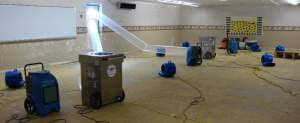
Industrial-grade air movers and LGR dehumidifiers run continuously — typically 24/7 — creating a controlled drying environment monitored daily.
Damaged Material Removal (If Required)
When building materials have absorbed water beyond safe drying thresholds, they are removed to expose hidden wet areas and prevent mold growth inside finished walls.
Sanitization & Antimicrobial Treatment
When building materials have absorbed water beyond safe drying thresholds, they are removed to expose hidden wet areas and prevent mold growth inside finished walls.
Documentation & Drying Certification
Every moisture reading and drying milestone is recorded and documented. This drying log becomes your insurance claim package — often the difference between a smooth settlement and a disputed one.
Restoration & Repairs
Our licensed general contractors complete all necessary repairs — drywall, flooring, cabinet work, and structural repairs — returning your property to its pre-loss condition.
Available 24 hours a day · 7 days a week
Need Help Right Now?
We respond within 60 minutes across the greater Asheville area.
The Equipment We Use — and Why It Matters
Professional water damage restoration requires professional-grade equipment. Consumer fans and dehumidifiers cannot generate the airflow and moisture removal capacity required to dry a structure safely within the timeframes needed to prevent mold growth.
Commercial Dehumidifiers
Industrial LGR dehumidifiers pull moisture at rates far beyond any residential unit — essential for driving drying in walls, ceilings, and subfloors.
High-Velocity Air Movers
Create a rapid airflow pattern at floor level that accelerates evaporation from flooring, carpet, and wall cavities.
Thermal Imaging Cameras
Infrared cameras detect temperature differentials, revealing hidden moisture pockets completely invisible to the naked eye.
Moisture Meters
Contact and non-invasive meters measure water content in wood, drywall, and concrete — tracking daily until safe drying thresholds are confirmed.
Submersible & Truck-Mount Pumps
Truck-mounted extractors remove hundreds of gallons rapidly; submersible pumps handle flooded basements and crawl spaces.
Drying Documentation Systems
Every reading and equipment log is recorded digitally — providing your insurer with a complete, timestamped record.
Navigating Your Insurance Claim for Water Damage
Secure Restoration works with all major insurance carriers. Our team documents the full scope of damage from hour one, prepares a line-item scope of loss, and communicates directly with your adjuster throughout the process.
Steps to Take Immediately After a Water Loss
1
Call Secure Restoration at (828) 490-7800 — stopping and extracting water takes priority over everything.
2
Call your insurance carrier to open a claim and receive a claim number.
3
Document visible damage with photos and video before anything is moved or cleaned.
4
Do not attempt to dry the property yourself — incomplete drying leads to mold and can complicate your claim.
5
Gather receipts and documentation for damaged personal property to support the contents portion of your claim.
How Long Does Water Damage Restoration Take?
| Timeframe | Phase | What Happens |
|---|---|---|
| Hours 0–24 | Emergency Response | Crew arrives, source stopped, water extracted, drying equipment deployed. |
| Days 1–3 | Active Drying Phase | Equipment runs 24/7. Technicians log moisture readings and adjust placement daily. |
| Days 3–5 | Monitoring & Verification | Materials approach target levels. Damaged materials removed if necessary. |
| Days 5–7 | Dry-Out Completion | Final readings confirm completion. Equipment removed. Drying certificate issued. |
| Week 2+ | Repairs & Restoration | Reconstruction begins — drywall, flooring, painting, structural repairs. |
Note for Hurricane Helene-Related Claims: Properties with Helene-related water damage may face extended timelines due to regional demand and supply chain delays. Our team will communicate realistic timelines throughout.
Why Choose a Local Asheville Restoration Company
There are meaningful differences between a locally rooted company like Secure Restoration and a national franchise that happens to be licensed in North Carolina.
| Secure Restoration — Local | National Franchise |
|---|---|
| ✓ Local crews — ~60 min response from WNC | ✗ Crew may dispatch from hours away |
| ✓ Knows Asheville terrain, housing stock & flood patterns | ✗ Generic protocols, not tailored to mountain terrain |
| ✓ A+ BBB, IICRC certified, community-accountable since 2012 | ✗ Corporate reputation, not local track record |
| ✓ No franchise markups — transparent pricing | ✗ Franchise overhead built into pricing |
| ✓ Licensed GC — mitigation AND reconstruction under one roof | ✗ Often subcontracts repairs — multiple accountability gaps |
Frequently Asked Questions
Yes. We provide 24/7 emergency water damage restoration in Asheville, NC, and nearby areas. Fast action helps reduce damage, protect materials, and start the drying process as soon as possible.
Your first priority is safety. If it is safe to do so, stop the source of the water, avoid standing water, and stay clear of electrical hazards. Then contact a professional water damage restoration company right away. (FEMA and local emergency guidance commonly advise shutting off utilities when safe and avoiding standing water hazards.)
Yes. Water damage should be treated as an emergency because moisture can spread quickly into flooring, drywall, insulation, and other building materials. Delays can increase the extent of the damage and raise the risk of mold growth.
Water damage should be addressed as quickly as possible. In many cases, mold can begin developing within 24 to 48 hours if wet materials are not dried properly.
In many cases, homeowners insurance may cover sudden and accidental water damage, such as damage from a burst pipe or appliance failure. Coverage varies by policy, and flood damage from outside water intrusion is often handled differently or excluded without separate flood insurance.
Yes. We can help document the damage and work with your insurance company during the claims process. Our goal is to make the restoration process as smooth and organized as possible.
The cost depends on the source of the water, how far the damage has spread, how long the area has been wet, and what materials are affected. After an inspection, we can outline the scope of work and next steps. Contact us for a free damage assessment.
Every job is different. Smaller losses may move more quickly, while larger losses involving multiple rooms, structural drying, or repairs can take longer. The timeline depends on moisture levels, affected materials, and the extent of reconstruction needed.
Yes. We provide flooded basement cleanup in Asheville, including water extraction, drying, cleanup, and restoration for affected materials and surfaces.
Yes. In addition to water removal and drying, we can restore and repair many of the materials affected by water damage, including drywall, flooring, ceilings, and other structural elements.
Yes. We provide water damage restoration services for both residential and commercial properties in Asheville and the surrounding area.
We help with many common causes of water damage, including burst pipes, appliance leaks, plumbing overflows, storm-related water intrusion, and other sudden water events.
That depends on the extent of the damage and which areas of the property are affected. For smaller losses, it may be possible to remain in the home, but larger losses may require limited access while drying, cleanup, and repairs are underway.
We serve Asheville, NC and surrounding communities, including Arden, Fletcher, Weaverville, Swannanoa, Black Mountain, Candler, and Hendersonville. If you’re located nearby and need emergency water damage restoration, contact us to confirm availability and response time in your area.